
Kerin Kennedy
Founder + Innovation Lead
Kerin Kennedy, M.S., is a strategic food industry executive with over two decades of expertise in Research and Development, innovation, and large-scale commercialization. As the Founder of Mesh Food Labs, Kerin has orchestrated the launch of thousands of products for global CPG leaders and disruptive startups, specializing in complex formulations such as protein-enhanced, sugar-reduced, and clean-label functional foods. With a Master’s degree in Food Science and Human Nutrition from Colorado State University and multiple industry patents, she bridges the gap between culinary excellence and technical scalability. Kerin’s career spans senior leadership roles at Hain Celestial and Boulder Brands, where she managed technical functions across hundreds of global manufacturing facilities, making her a trusted authority in bridging benchtop innovation with commercial reality.
Expertise
- Product Strategy
- Molecular Formulation
- Commercialization
- Food Science
- Ingredient Innovation
- High-Concentration Protein Research
- Technical Transfer
- IP Development
- GTM Strategy
- Clean Label Formulation
- Functional Foods
Education
- Colorado State University

Publication History
Latest insights and research by Kerin Kennedy.
Case Study: How Tillamook Disrupted Greek Yogurt & Ice Cream Novelties in Under 18 Months
How Mesh Food Labs partnered with Tillamook to develop differentiated Greek yogurt and ice cream novelty products through rapid innovation sprints and sensory-led formulation.
Case Study: Building Madhava's Aggressive New Product Pipeline Across Multiple Categories
How Mesh Food Labs served as Madhava's outsourced R&D engine, developing a portfolio of differentiated natural products from concept through co-packer launch.
Case Study: Creating a First-of-Its-Kind Protein Product for Reverb
How Mesh Food Labs turned an ambitious startup vision into a technically validated, production-ready protein product with substantiated nutritional claims.
Pea Protein vs. Soy Protein: The R&D Guide to High-Protein Beverage Bases
A technical comparison of pea and soy proteins, analyzing solubility, PDCAAS scores, and flavor profiles for high-performance functional beverages.
Xanthan Gum vs. Citrus Fiber: The Tech Guide to Clean-Label Stabilization
A technical comparison of xanthan gum and citrus fiber, analyzing their yield stress, viscosity impact, and label appeal for modern food formulations.

Monk Fruit vs. Allulose: Comparing Clean-Label Sweeteners for Modern Food
A technical analysis of monk fruit and allulose, comparing their sweetness intensity, bulking properties, and metabolic impact for sugar-reduction strategies.
Case Study: Circular Economy R&D: Upcycling Spent Grain for High-Fiber Nutrition
A technical analysis of how Upcycled Foods Inc. transformed brewery waste (spent grain) into a high-functionality food ingredient through precision drying and milling.
Case Study: Reducing Sodium by 30% in Industrial Bread Production Without Loss of Volume
A technical review of the industry-wide R&D effort in the UK to reduce salt levels in bread while maintaining yeast activity, gluten structure, and consumer acceptance.
Case Study: Achieving Dairy-Identical Performance in Vegan Whey via Precision Fermentation
An analysis of how precision fermentation was used to bio-manufacture beta-lactoglobulin, creating a non-animal whey protein with identical functionality to bovine dairy.
Case Study: The Molecular Engineering of the First 'Bleeding' Plant-Based Burger
An in-depth technical review of how Impossible Foods utilized leghemoglobin (heme) and precision fermentation to replicate the metallic, savory flavor of animal meat.
Case Study: Extending Shelf-Life by 200% Using Biomimetic Edible Coatings
How Apeel Sciences developed a plant-derived fatty acid coating that mimics the natural 'peel' of produce to reduce moisture loss and oxidation.
How to Calculate PDCAAS and Adjust Formulas for Protein Claims
A technical protocol for calculating PDCAAS and optimizing plant-based formulas to hit 'Good Source' or 'Excellent Source' protein claims.
The UPF Backlash: Engineering Technical Texture without the 'Processing' Label
As the spotlight on Ultra-Processed Foods (UPFs) intensifies, food scientists must find new ways to achieve stability and mouthfeel using 'kitchen-logic' ingredients and minimal mechanical intervention.
The Sensory Target Framework: Defining Success Before You Blend
Stop "chasing your tail" in the lab. Learn how to define quantitative and qualitative sensory success gates to reduce R&D waste and speed up launch.
The Precision Fermentation Inflection Point: Scaling Animal-Free Functional Ingredients
Why precision fermentation is moving beyond dairy proteins into a wider array of high-value functional ingredients, and what it means for the next generation of food products.
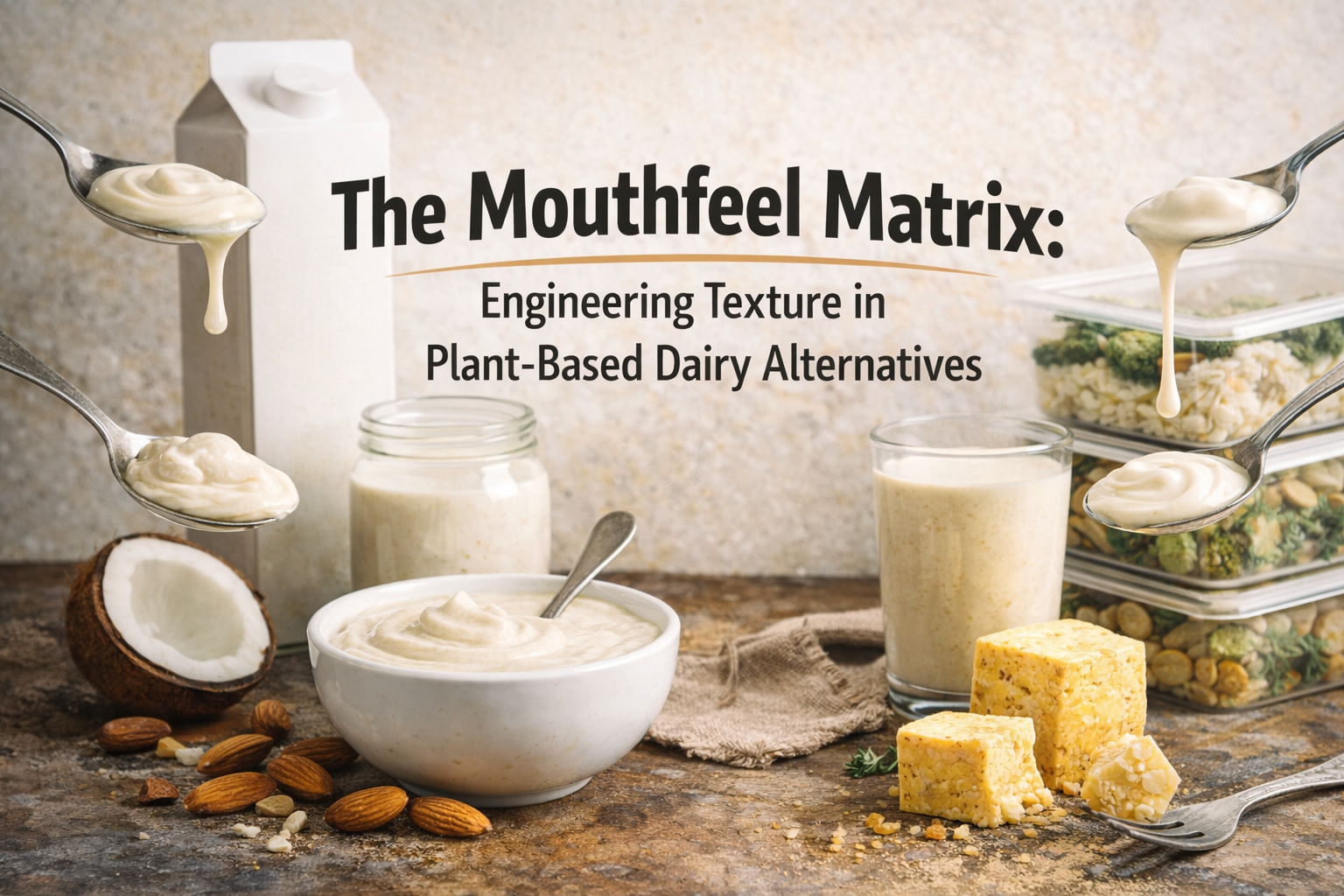
The Mouthfeel Matrix: Engineering Texture in Plant-Based Dairy Alternatives
A technical guide to fat mimetics, hydrocolloid interaction, and shear processing to achieve dairy-identical textures in plant-based milks and yogurts.
The Modern Food Formulation Handbook: Balancing Science and Sensory
A comprehensive guide to bridging the gap between culinary excellence and technical stability in modern food product development.
Ingredient Economics: A Guide to Total Cost in Use (TCiU)
Beyond the price per kilo—learn how to calculate the true economic impact of functional ingredients on your production efficiency and margins.
How to Conduct a 'Gold Standard' Sensory Benchtop Trial
A protocol for establishing a sensory baseline and conducting rapid iterative testing during the early stages of food product development.
How to Replace Chemical Preservatives with Hurdle Technology
A framework for food brands to remove synthetic preservatives like Potassium Sorbate while maintaining safety and shelf-life through hurdle technology.
Agile R&D: Why Fixed Formulas are Dying in an Age of Global Supply Chain Volatility
How modern food teams are shifting from rigid 'Gold Standard' recipes to ingredient-agnostic technical frameworks to maintain consistency and margins in a volatile market.
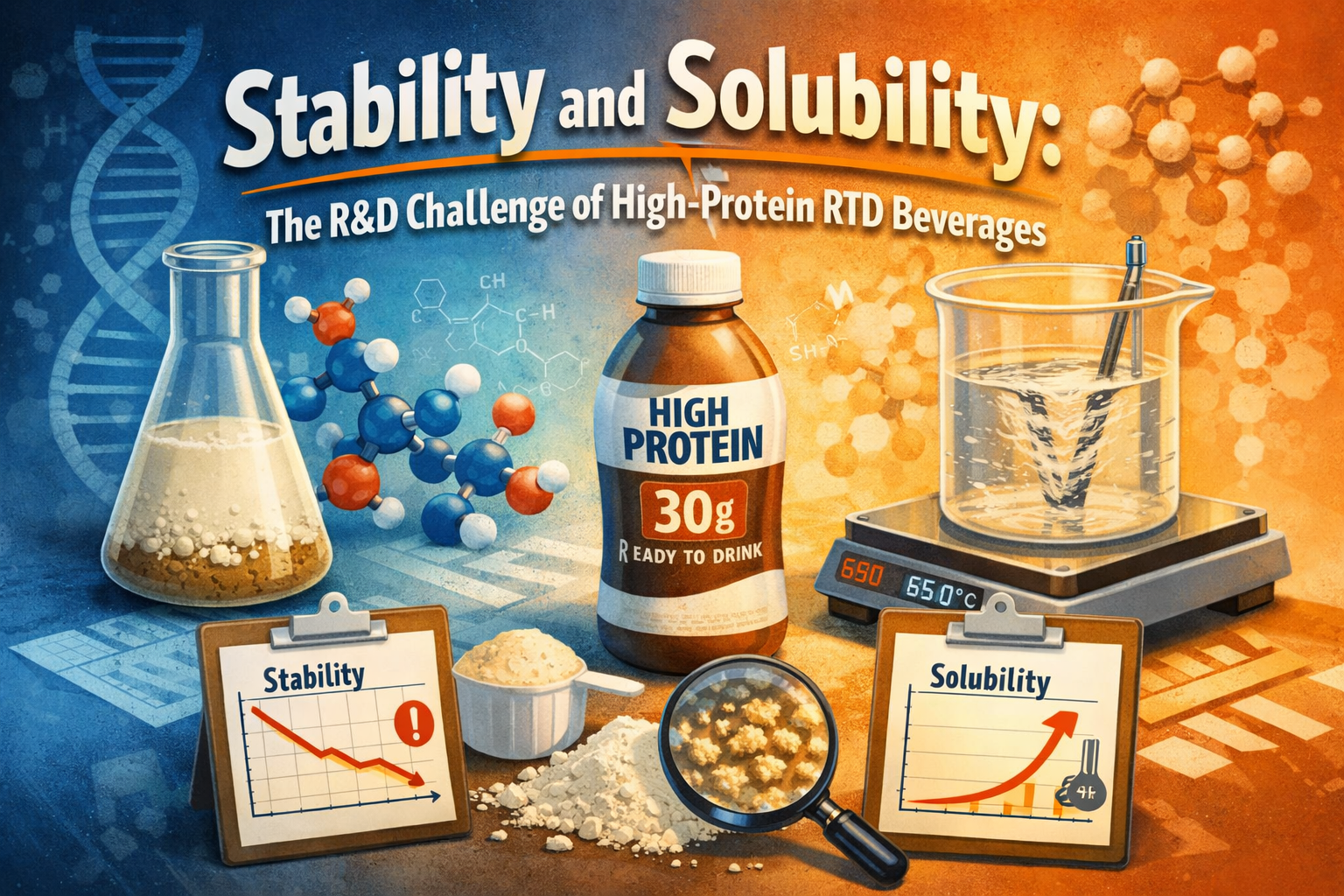
Stability and Solubility: The R&D Challenge of High-Protein RTD Beverages
An in-depth technical analysis of protein sedimentation, pH buffering, and hydration protocols for high-performance functional beverages.
The GLP-1 Effect: How Weight Loss Drugs are Forcing a Food Innovation Reset
An analysis of how the rise of GLP-1 agonists is shifting consumer demand toward nutrient-dense, high-protein, and GI-supportive food formats.
Functional Labeling Strategy: Navigating Claims for Modern Food Brands
A technical guide to nutrient content claims, protein quality (PDCAAS), and clean-label 2.0 to drive consumer trust and market growth.
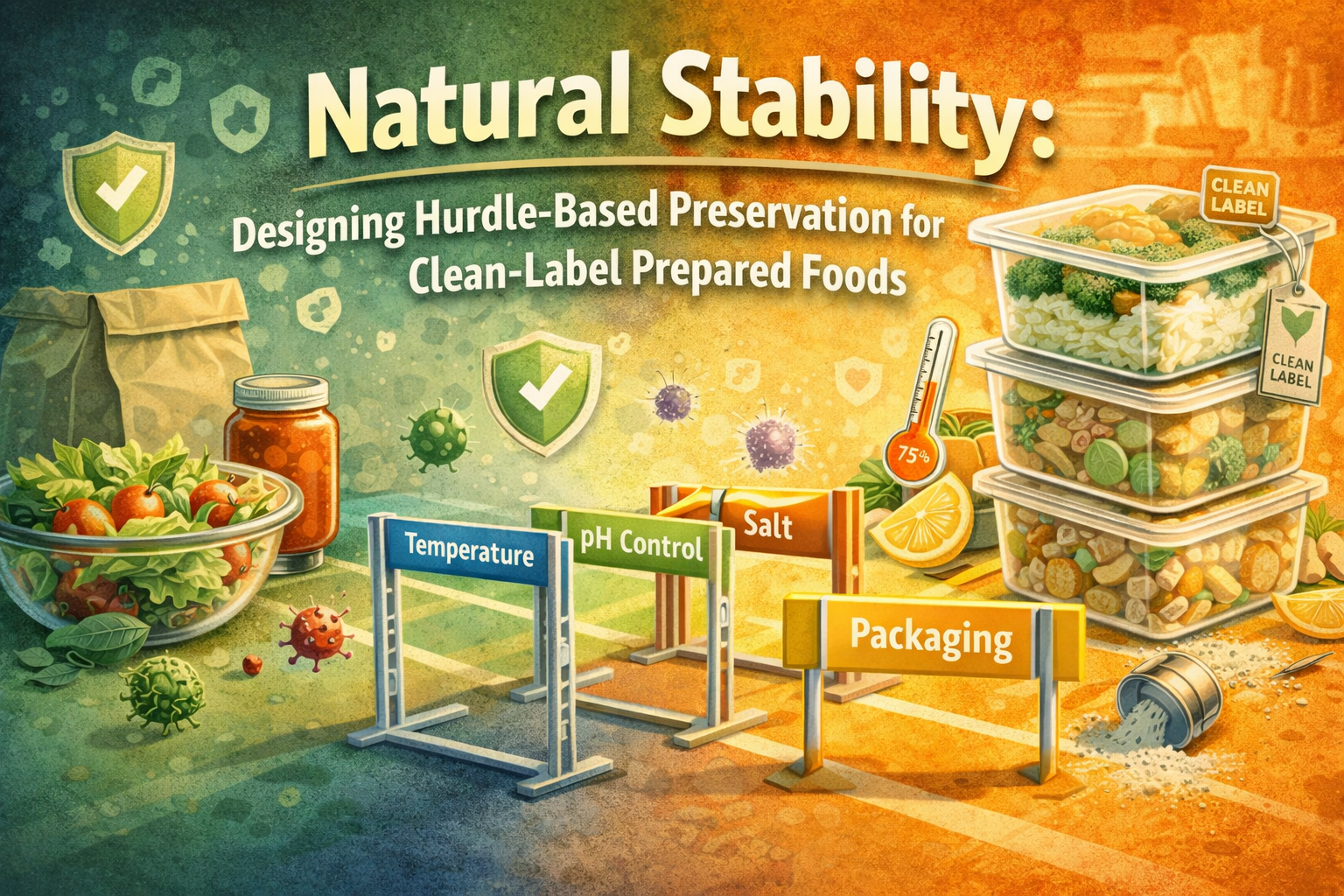
Natural Stability: Designing Hurdle-Based Preservation for Clean-Label Prepared Foods
An exploration of hurdle technology—combining pH, water activity, and natural antimicrobials—to achieve shelf-life targets without synthetic preservatives.
Beyond 'Free-From': The Shift Toward Regenerative and Upcycled Ingredient Systems
Why 'clean label' is no longer enough for the modern consumer, and how brands are leveraging upcycled side-streams and regenerative agriculture to build the next generation of sustainable food products.
Nutrition Labeling Mistakes: How to Avoid Compliance Risks in Food R&D
A technical guide to FDA and international nutrition labeling compliance, focusing on common pitfalls in claims, serving sizes, and ingredient declarations.
Food product development cost: pricing, drivers, and budgeting
Understand food product development cost ranges, key pricing drivers, and how to budget R&D for a successful launch.
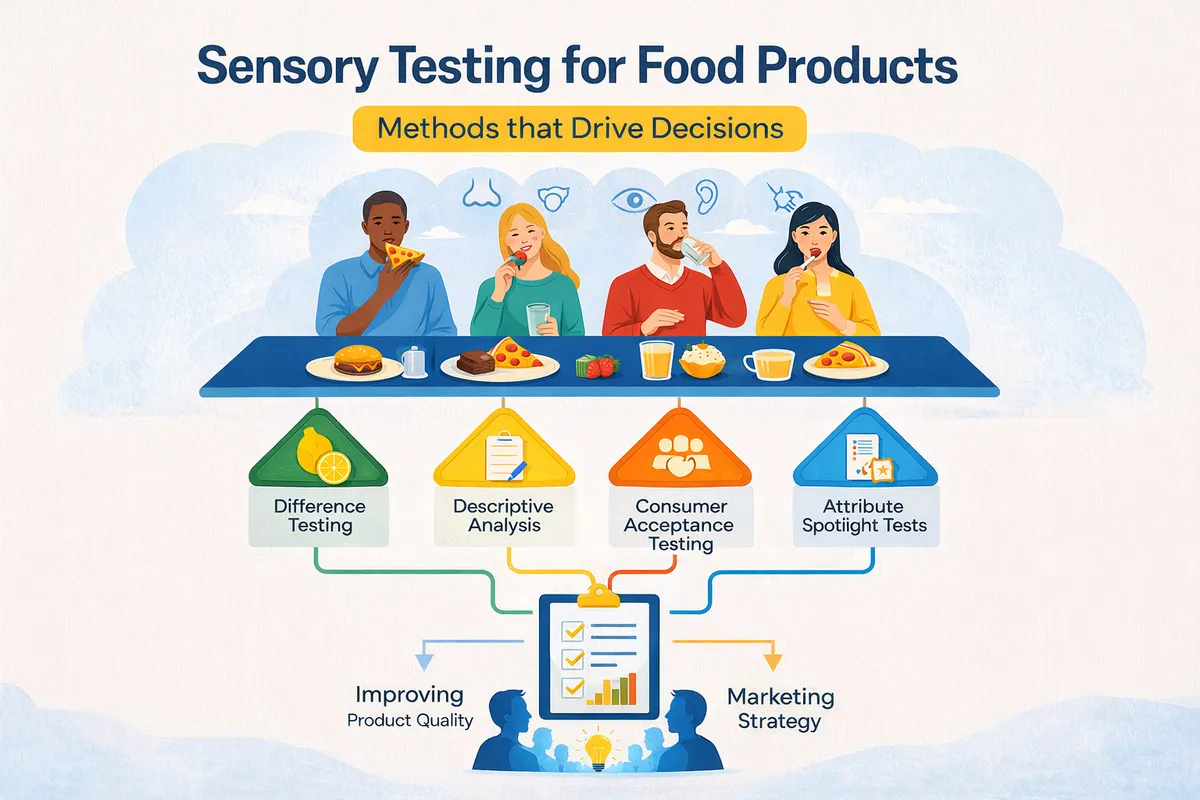
Sensory Testing for Food Products: Methods That Drive Commercial Decisions
A technical guide to sensory evaluation, including discrimination testing, descriptive analysis, and consumer validation gates for successful food product development.
The Strategic Ingredient Matrix: Balancing Cost, Label, and Functionality
A technical framework for food formulation that navigates the three-way tradeoff between cost targets, clean-label goals, and functional performance.
Food Formulation vs. Reformulation: Choosing the Efficient Path to Market
A strategic guide for food brands to decide between ground-up formulation and targeted reformulation to optimize R&D budgets and timelines.
Shelf-Life Testing Methods: Real-Time vs. Accelerated Stability
A technical guide to food shelf-life validation, covering Arrhenius modeling, microbial challenge studies, and sensory degradation gates.