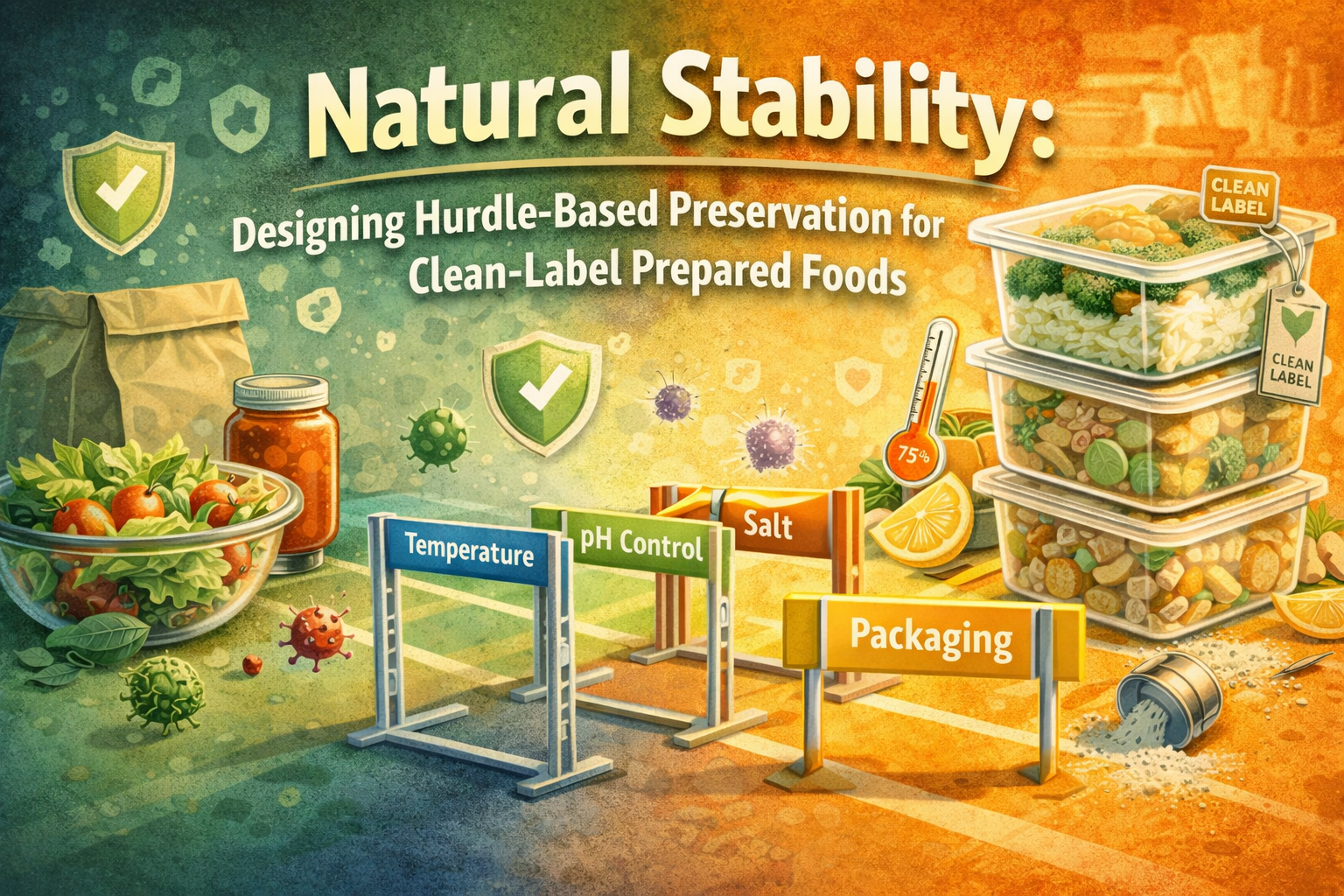
Natural Stability: Designing Hurdle-Based Preservation for Clean-Label Prepared Foods
An exploration of hurdle technology—combining pH, water activity, and natural antimicrobials—to achieve shelf-life targets without synthetic preservatives.

Direct access to our technical library on formulation, shelf-life protocols, and scale-up strategies.
An exploration of hurdle technology—combining pH, water activity, and natural antimicrobials—to achieve shelf-life targets without synthetic preservatives.

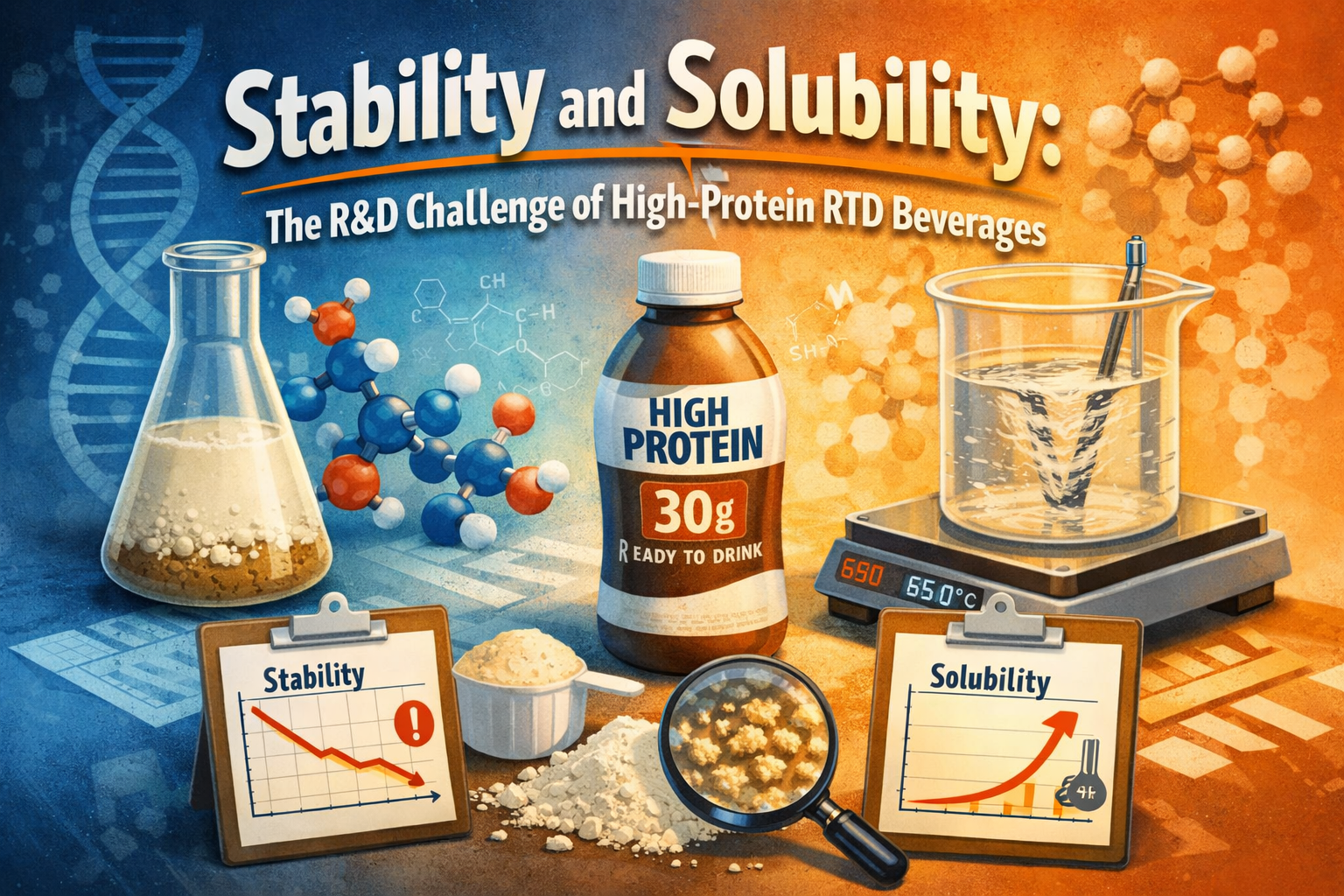
An in-depth technical analysis of protein sedimentation, pH buffering, and hydration protocols for high-performance functional beverages.

A technical guide to fat mimetics, hydrocolloid interaction, and shear processing to achieve dairy-identical textures in plant-based milks and yogurts.

A technical analysis of how shear rates, thermal mass, and cooling curves impact food flavor and texture during the transition from lab to production.
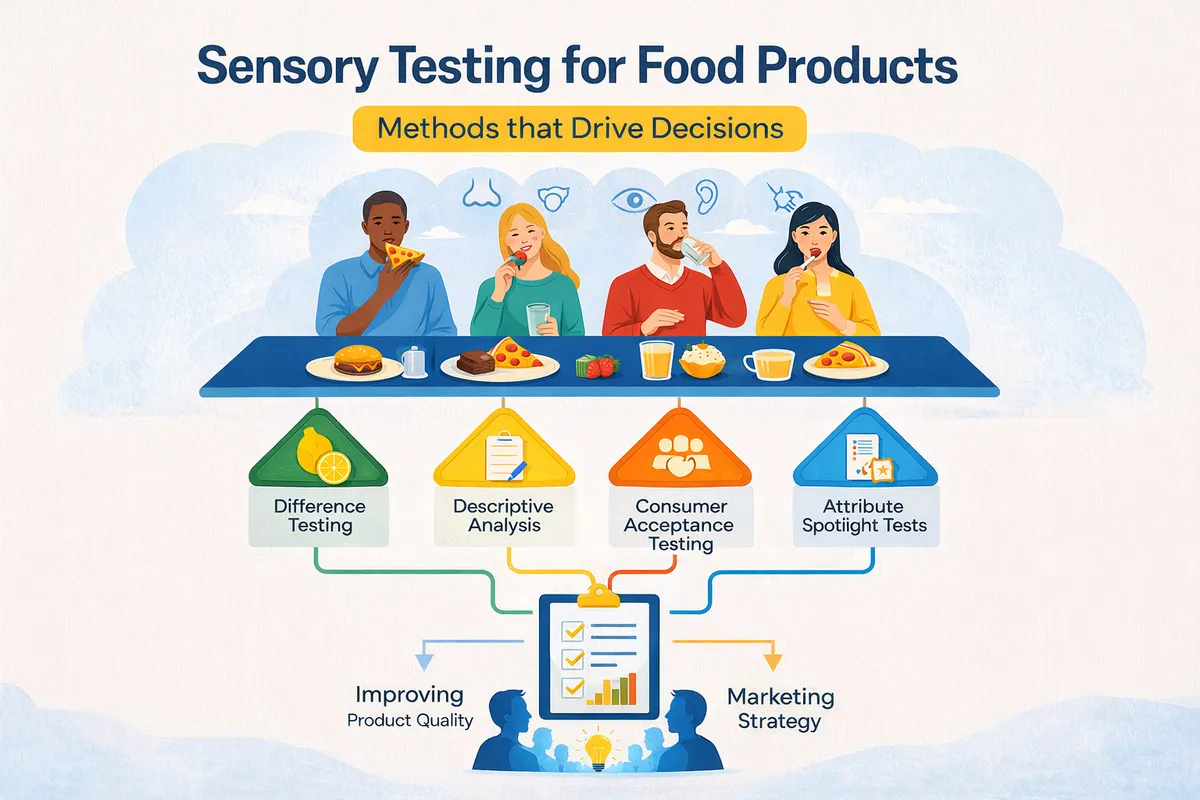
A technical guide to sensory evaluation, including discrimination testing, descriptive analysis, and consumer validation gates for successful food product development.

A technical guide to food shelf-life validation, covering Arrhenius modeling, microbial challenge studies, and sensory degradation gates.

A technical guide to nutrient content claims, protein quality (PDCAAS), and clean-label 2.0 to drive consumer trust and market growth.

Beyond the price per kilo—learn how to calculate the true economic impact of functional ingredients on your production efficiency and margins.

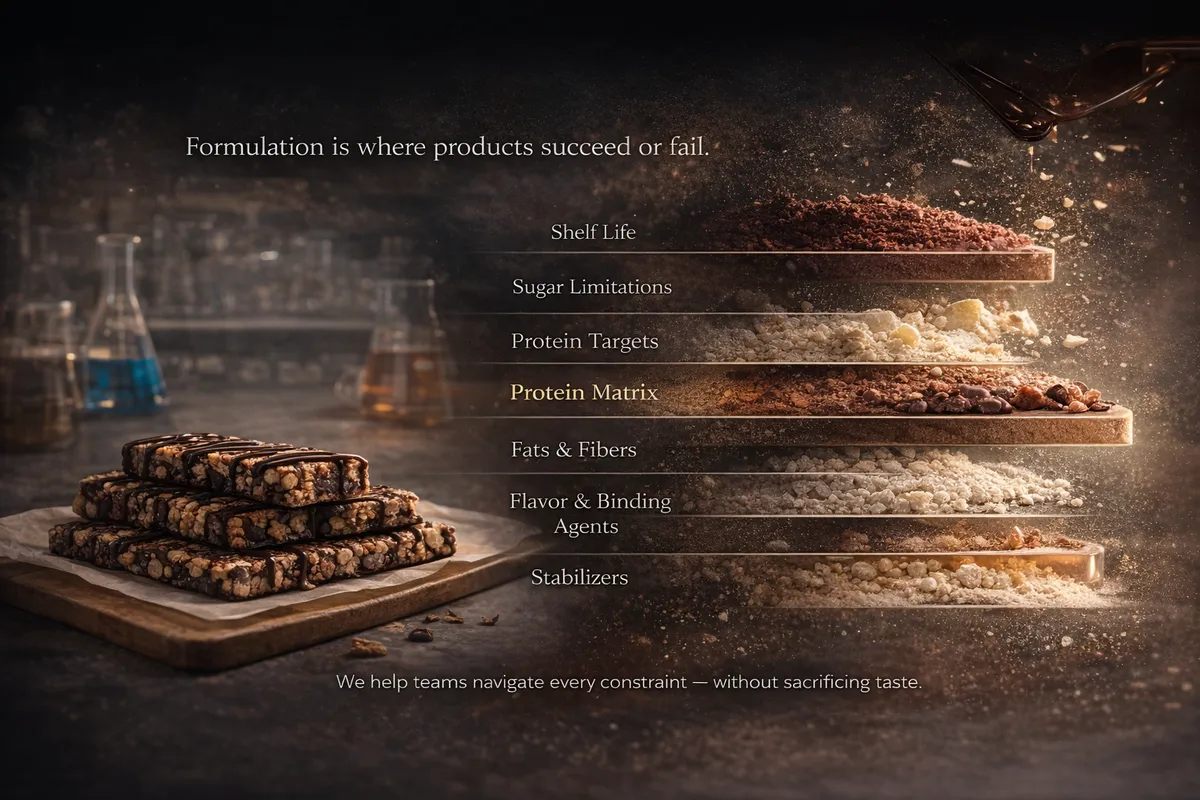
A comprehensive guide to bridging the gap between culinary excellence and technical stability in modern food product development.

Stop "chasing your tail" in the lab. Learn how to define quantitative and qualitative sensory success gates to reduce R&D waste and speed up launch.

A technical guide to preparing your product for large-scale manufacturing, including Critical Process Parameters (CPPs) and co-manufacturer readiness audits.

A technical roadmap for food product development, detailing the duration of formulation, scale-up, and shelf-life validation phases to ensure on-time commercial launches.

A technical guide to FDA and international nutrition labeling compliance, focusing on common pitfalls in claims, serving sizes, and ingredient declarations.

A technical protocol for calculating PDCAAS and optimizing plant-based formulas to hit 'Good Source' or 'Excellent Source' protein claims.

A framework for food brands to remove synthetic preservatives like Potassium Sorbate while maintaining safety and shelf-life through hurdle technology.

A protocol for establishing a sensory baseline and conducting rapid iterative testing during the early stages of food product development.

A technical protocol for measuring and predicting viscosity changes as food products move from the benchtop to full-scale production equipment.

A technical protocol for transitioning beverage prototypes from lab beakers to Ultra-High Temperature (UHT) commercial lines without losing flavor or stability.

A comprehensive guide and technical checklist for food brands to evaluate, audit, and select the right contract manufacturing partner.

A comprehensive technical checklist for transitioning food products from lab to pilot plant, focusing on process parameters, data collection, and risk mitigation.

How modern food teams are shifting from rigid 'Gold Standard' recipes to ingredient-agnostic technical frameworks to maintain consistency and margins in a volatile market.

Why 'clean label' is no longer enough for the modern consumer, and how brands are leveraging upcycled side-streams and regenerative agriculture to build the next generation of sustainable food products.

An analysis of how the rise of GLP-1 agonists is shifting consumer demand toward nutrient-dense, high-protein, and GI-supportive food formats.

Why precision fermentation is moving beyond dairy proteins into a wider array of high-value functional ingredients, and what it means for the next generation of food products.

As the spotlight on Ultra-Processed Foods (UPFs) intensifies, food scientists must find new ways to achieve stability and mouthfeel using 'kitchen-logic' ingredients and minimal mechanical intervention.

Understand food product development cost ranges, key pricing drivers, and how to budget R&D for a successful launch.

A technical framework for food formulation that navigates the three-way tradeoff between cost targets, clean-label goals, and functional performance.

How Apeel Sciences developed a plant-derived fatty acid coating that mimics the natural 'peel' of produce to reduce moisture loss and oxidation.

An in-depth technical review of how Impossible Foods utilized leghemoglobin (heme) and precision fermentation to replicate the metallic, savory flavor of animal meat.

An analysis of how precision fermentation was used to bio-manufacture beta-lactoglobulin, creating a non-animal whey protein with identical functionality to bovine dairy.

A technical review of the industry-wide R&D effort in the UK to reduce salt levels in bread while maintaining yeast activity, gluten structure, and consumer acceptance.

A technical analysis of how Upcycled Foods Inc. transformed brewery waste (spent grain) into a high-functionality food ingredient through precision drying and milling.

A strategic comparison of co-manufacturing partnerships and in-house pilot production, analyzing cost, speed-to-market, and quality control for emerging food brands.

A technical comparison of High-Pressure Processing (HPP) and Ultra-High Temperature (UHT) processing, analyzing their impact on nutrient density, sensory quality, and shelf-life.

A technical analysis of monk fruit and allulose, comparing their sweetness intensity, bulking properties, and metabolic impact for sugar-reduction strategies.

A technical comparison of pea and soy proteins, analyzing solubility, PDCAAS scores, and flavor profiles for high-performance functional beverages.

A technical comparison of xanthan gum and citrus fiber, analyzing their yield stress, viscosity impact, and label appeal for modern food formulations.

A strategic guide for food brands to decide between ground-up formulation and targeted reformulation to optimize R&D budgets and timelines.